Importance of the reclassification of the clinical significance of new intronic variants related to recessive dystrophic epidermolysis bullosa
DOI:
https://doi.org/10.29176/30284163.1948Keywords:
Dystrophic Epidermolysis Bullosa, COL7A1 gene, Genotype, PhenotypeAbstract
Introduction: Dystrophic epidermolysis bullosa is one of the types of epidermolysis bullosa, a heterogeneous group of genodermatoses characterized by mucocutaneous fragility and blistering in the face of minimal trauma, secondary to variants in genes that encode proteins for dermoepidermal adhesion.
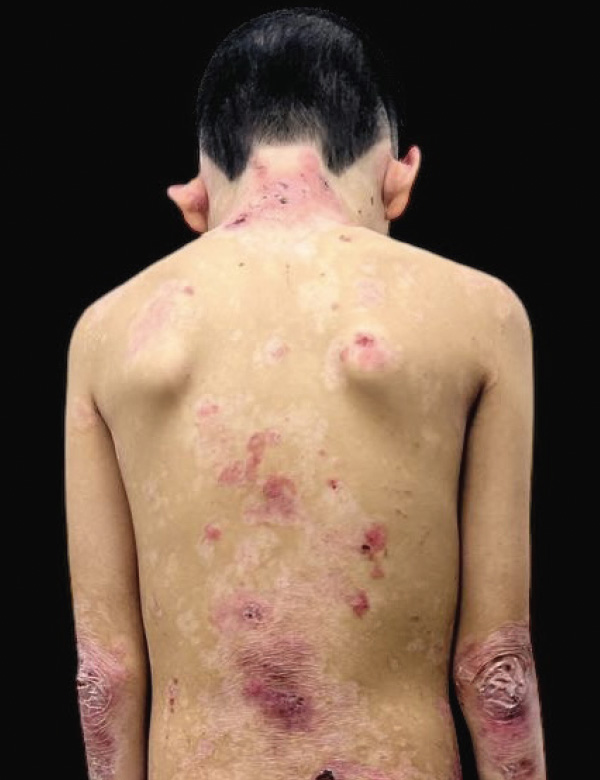
Clinical case: 9-year-old male patient, with a diagnosis of epidermolysis bullosa since the first month of life, associated with esophageal stenosis since he was 7 years old. Given the importance of a specific diagnosis due to the great phenotypic and genotypic heterogeneity of epidermolysis bullosa, a genetic study was requested, next generation sequencing of a panel of genes related to epidermolysis bullosa. The c.4635+5G>A variant was found homozygous for the COL7A1 gene, reported as of uncertain clinical significance in ClinVar and Franklin by genoox, in association with dystrophic epidermolysis bullosa, with an autosomal recessive inheritance pattern. Considering the recommendations of the American College of Medical Genetics and Genomics, Association of Molecular Pathology and ClinGen, a reanalysis of the clinical significance of the variant was carried out, finding a change in it to probably pathogenic significance using in silico prediction software, functional and molecular analyses.
Discussion and conclusions: Given the great variability and overlap of clinical manifestations, it is necessary to make a diagnosis through genetic studies for an adequate genotype-phenotype correlation. This will allow a specific diagnosis that makes it easier to establish targeted treatments, adequate follow-up, and a more accurate prognosis, with the purpose of personalized, predictive, precision, preventive, participatory and population-based medicine.
Author Biographies
Isabella Gonzalez Saldarriaga, Universidad Libre de Cali, Colombia
Médico residente, Posgrado de Dermatología, Universidad Libre de Cali, Colombia. Grupo de Investigación en Dermatología (GRINDER)
Lina Johanna Moreno-Giraldo, Universidad Libre de Cali, Colombia
Médico pediatra. Máster y doctorado en Ciencias Biomédicas-Genética Médica, Universidad Libre de Cali, Colombia. Grupo de Investigación en Dermatología (GRINDER).
José María Satizábal Soto, Universidad del Valle, Cali, Colombia
Médico genetista. Máster y doctorado en Ciencias Biomédicas-Genética Médica, Universidad del Valle, Cali, Colombia.
How to Cite
Downloads
Downloads
Published
How to Cite
Issue
Section
License
Copyright (c) 2024 Isabella Gonzalez Saldarriaga, Lina Johanna Moreno-Giraldo, José María Satizábal Soto

This work is licensed under a Creative Commons Attribution-NonCommercial-ShareAlike 4.0 International License.