Approach to genodermatoses from precision medicine: case report
DOI:
https://doi.org/10.29176/2590843X.1919Keywords:
Ichthyosis, Hyperkeratosis, Epidermolytic, Keratin-1, Keratin-10, Genetics, Precision medicineAbstract
Epidermolytic ichthyosis (EI), an autosomal dominant genetic disease that is part of the keratinopathic ichthyosis (KPI) (1). It affects 1 in every 200,000 to 300,000 newborns, as a result of a variant in the KRT1 or KRT10 gene that encodes keratin 1 and 10 respectively; proteins present in the keratinocytes of the suprabasal layers of the epidermis, where they form the bundles of tonofibrils and together are early markers of cellular differentiation (2).
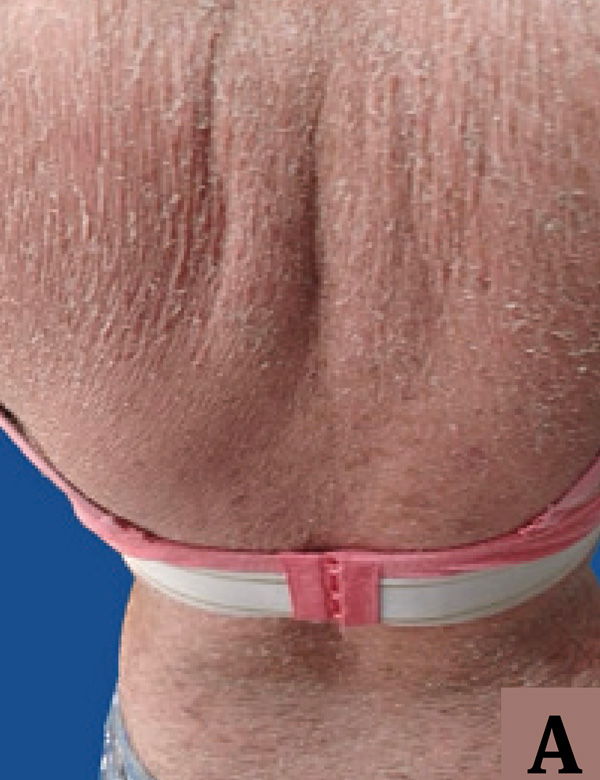
At birth, patients present erythroderma and blisters, as a consequence of the fragility of the cytoskeleton of the epidermal cells and the collapse of the keratin filaments. Skin changes evolve over time to hyperkeratosis (3). Two cases of patients with IE are presented, in which the genetic study played an important role in the specific diagnosis, in order to establish a targeted treatment, establish prognosis and risk of heritability, bringing us closer to precision medicine.
Author Biographies
Iván Darío Zúñiga-Espitia, Universidad Libre, Seccional Cali. Grupo de Investigación en Dermatología, Cali, Colombia
Residente de Dermatología, Universidad Libre, Seccional Cali. Grupo de Investigación en Dermatología, Cali, Colombia
Lina Johanna Moreno Giraldo, Universidad Libre, Seccional Cali, Cali, Colombia.
Especialista en Pediatría. Magíster y doctora en Genética Médica. Docente, Posgrados, Universidad Libre, Seccional Cali, Cali, Colombia
José María Satizábal Soto, Independiente
Magíster y doctor en Genética Médica
References
Oji V, Tadini G, Akiyama M, Blanchet Bardon C, Bodemer C, Bourrat E, et al. Revised nomenclature and classification of inherited ichthyoses: results of the First Ichthyosis Consensus Conference in Sorèze 2009. J Am Acad Dermatol. 2010;63(4):607-41. https://doi.org/10.1016/j.jaad.2009.11.020
Ho M, Thompson B, Fisk JN, Nebert DW, Bruford EA, Vasiliou V, et al. Update of the keratin gene family: evolution, tissue-specific expresión patterns, and relevance to clinical disorders. Hum Genomics. 2022;16(1):1-21. https://doi.org/10.1186/s40246-021-00374-9
Peter Rout D, Nair A, Gupta A, Kumar P. Epidermolytic hyperkeratosis: clinical update. Clin Cosmet Investig Dermatol. 2019;12:333-44. https://doi.org/10.2147/CCID.S166849
March OP, Lettner T, Klausegger A, Ablinger M, Kocher T, Hainzl S, et al. Gene Editing–Mediated Disruption of Epidermolytic Ichthyosis-Associated KRT10 Alleles Restores Filament Stability in Keratinocytes. J Invest Dermatol. 2019;139(8):1699-1710.e6. https://doi.org/10.1016/j.jid.2019.03.1146
Ross R, DiGiovanna JJ, Capaldi L, Argenyi Z, Fleckman P, Robinson-Bostom L. Histopathologic characterization of epidermolytic hyperkeratosis: a systematic review of histology from the National Registry for Ichthyosis and Related Skin Disorders. J Am Acad Dermatol. 2008;59(1):86-90. https://doi.org/10.1016/j.jaad.2008.02.031
Shajil C, Sathishkumar D, Danda S, Thomas M. An unusual case of keratinopathic icthyosis: a diagnostic conundrum. Dermatol Online J. 2021;27(6). https://doi.org/10.5070/D327654054
Pan S, Leszczynska MA, Parekh P, Hendrick SJ. Epidermolytic Ichthyosis in a Neonate. J Pediatr. 2023;263:113711. https://doi.org/10.1016/j.jpeds.2023.113711
Ministerio de Salud y Protección Social. Resolucion 023 de 2023. Por medio de la cual se actualiza el lista de enfermedades huérfanasraras [Internet]. Enero 4 de 2023. Disponible en: https://t.ly/sYkE8
Buitrago KM, Correa LA, Zuluaga DC. Eritrodermia ictiosiforme congénita ampollosa: a propósito de un caso. Acta Pediatr Esp. 2020;78(3-4):e124-e126.
Cortés H, Del Prado-Audelo ML, Urbán-Morlán Z, Alcalá-Alcalá S, González-Torres M, Reyes-Hernández OD, et al. Pharmacological treatments for cutaneous manifestations of inherited ichthyoses. Arch Dermatol Res. 2020;312(4):237-48. https://doi.org/10.1007/s00403-019-01994-x
Joosten MDW, Clabbers JMK, Jonca N, Mazereeuw-Hautier J, Gostyński AH. New developments in the molecular treatment of ichthyosis: review of the literature. Orphanet J Rare Dis. 2022;17(1):1-15. https://doi.org/10.1186/s13023-022-02430-6
Akiyama M. Understanding immune profiles in ichthyosis may lead to novel therapeutic targets. J Allergy Clin Immunol. 2022;149(4):1210-2. https://doi.org/10.1016/j.jaci.2022.02.010
Brooks IR, Sheriff A, Moran D, Wang J, Jacków J. Challenges of Gene Editing Therapies for Genodermatoses. Int J Mol Sci. 2023;24(3):2298. https://doi.org/10.3390/ijms24032298
How to Cite
Downloads
Downloads
Published
How to Cite
Issue
Section
License
Copyright (c) 2024 Iván Darío Zúñiga-Espitia, Lina Johanna Moreno Giraldo, José María Satizábal Soto

This work is licensed under a Creative Commons Attribution-NonCommercial-ShareAlike 4.0 International License.
| Article metrics | |
|---|---|
| Abstract views | |
| Galley vies | |
| PDF Views | |
| HTML views | |
| Other views | |