Make the diagnosis yourself. Part 1
DOI:
https://doi.org/10.29176/2590843X.1981Keywords:
dermatophytesAbstract
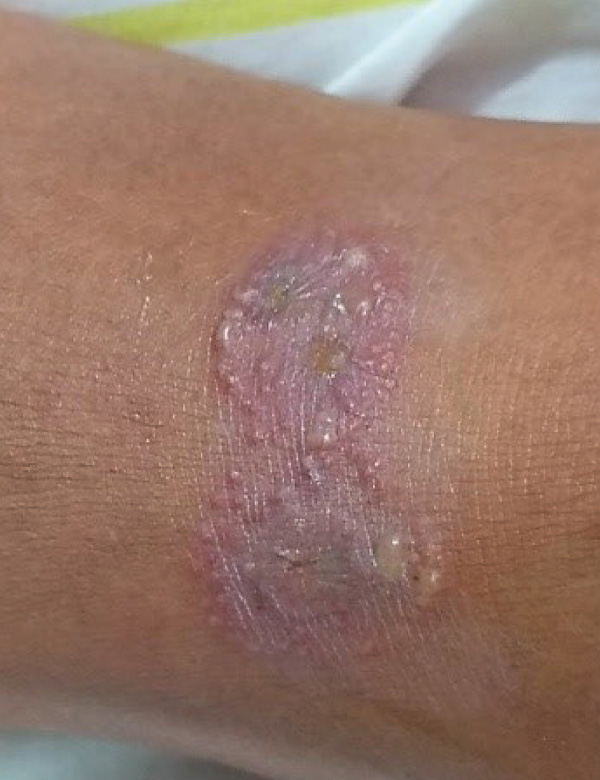
Introduction: Tinea incognita is a dermatosis that is difficult to identify due to the prolonged and erroneous use of corticosteroids that can simulate other inflammatory skin diseases. Methods and results: We present the case of a patient with progressive growth of an annular plaque on the dorsum of the right foot after chronic use for two months of a topical corticosteroid that partially controlled the clinical symptoms and when the medication was suspended it grew Trichophyton tonsurans. A diagnostic impression of corticostropiate tinea was given and the dermatophyte infection was managed systemically and topically. Conclusions: The prescription of topical or oral steroids should be limited without confirmation of the microorganism related to the clinical manifestations since it can mask the diagnosis and delay timely treatment for dermatophytosis.
Author Biographies
Laura Garcia Blanco, Universidad Icesi, Facultad Ciencias de la Salud, Cali, Colombia
Residente de Dermatología, Universidad Icesi, Facultad Ciencias de la Salud, Cali, Colombia
Andres Vidal Cagigas, Fundación Valle del Lili, Cali, Colombia
Dermatólogo, Unidad de Dermatología, Fundación Valle del Lili, Cali, Colombia.
References
Pérez-Elizondo AD, Del Pino-Rojas GT, Contreras-Guzman C. Tiña incógnita: A propósito de dos casos y breve revisión de la literatura. Arch Venez Pueric Pediatr. 2013;76(1):27–9.
Ghaderi A, Tamimi P, Firooz A, Fattahi M, Ghazanfari M, Fattahi M. Updates on Tinea Incognita: Literature review. Curr Med Mycol. 2023;9(2):52–63.
Cohen PR, Crowley CS, Erickson CP, Calame A. Tinea and Tattoo: A Man Who Developed Tattoo-Associated Tinea Corporis and a Review of Dermatophyte and Systemic Fungal Infections Occurring Within a Tattoo. Cureus. 2022;14(1):1–15.
Ohno S, Tanabe H, Kawasaki M, Horiguchi Y. Tinea corporis with acute inflammation caused by Trichophyton tonsurans. J Dermatol. 2008;35(9):590–3.
Suzuki T, Sato T, Horikawa H, Kasuya A, Yaguchi T. A case of tinea pseudoimbricata due to trichophyton tonsurans induced by topical steroid application. Med Mycol J. 2021;62(4):67–70.
Klein EJ, Karim M, Kushner CJ, Marji JS, Adotama P, Lo Sicco K, et al. Enlarging alopecic patch in an African American woman with central centrifugal cicatricial alopecia: A case of concomitant tinea incognito. JAAD Case Reports [Internet]. 2022;23:67–9. Available from: https://doi.org/10.1016/j.jdcr.2022.02.028
María del Carmen Padilla Desgarennes LPAO, Hernández. Tiña por Trichophyton tonsurans en diversas topografías. Revisión de la literatura. Cent Dermatol Pascua [Internet]. 2018;20:46–53. Available from: https://www.medigraphic.com/pdfs/derma/cd-2011/cd112c.pdf
Rajamohanan R et al. Epidemiological Trends and Clinicomycological Profile of Chronic Dermatophytosis: A Descriptive Study From South India. Indian J Dermatol. 2021;66(4):445.
How to Cite
Downloads
Downloads
Published
How to Cite
Issue
Section
License
Copyright (c) 2025 Laura Garcia Blanco, Andres Vidal Cagigas

This work is licensed under a Creative Commons Attribution-NonCommercial-ShareAlike 4.0 International License.
| Article metrics | |
|---|---|
| Abstract views | |
| Galley vies | |
| PDF Views | |
| HTML views | |
| Other views | |